The guard’s whistle cuts sharply through the seaside air at Paignton station. With a great hiss of steam and a slow, deliberate chuff, the train begins to move. You slide past the modern Great Western Railway platforms, leaving the national network behind, and curve gently south. Within moments, the houses give way to a brilliant, wide-open view of the sea. This is the start of the Dartmouth Steam Railway, a journey celebrated for its magnificent views along the coast of South England.
For just under seven miles, the line hugs the Torbay coast before swinging inland to follow the wooded banks of the River Dart. It is a trip of dramatic scenery, remarkable Victorian engineering, and pure nostalgia. But the railway is only one part of the adventure. It connects with ferries and river boats to create a wonderful day out, linking the classic seaside town of Paignton with the historic naval port of Dartmouth. It is an experience by land and by water.
The Journey from Paignton to Kingswear
Your trip begins at Paignton’s Queen’s Park station, which sits right alongside the main line station. It is a convenient starting point, easily reached by GWR trains from Exeter St Davids, Newton Abbot, and further afield. Once you have your ticket and have found your seat in a beautifully restored carriage, the spectacle begins.
Goodrington Sands and the Climb
The first landmark is Goodrington Sands, a long, sandy beach. The train runs right alongside it on a sea wall, so close you can almost feel the spray. Children often wave from the beach as the engine steams past, its smoke mingling with the salty air. After the beach, the hard work for the locomotive begins. The line starts to climb steeply away from the coast, giving you an ever-expanding panorama of Torbay. Look back and you can see Paignton and Torquay curving around the bay. On a clear day, the view is simply breathtaking.
This section requires real skill from the engine’s driver and fireman. They must balance the fire and the steam pressure perfectly to get the heavy train up the gradient. You can hear the engine working hard, the rhythmic beat of the exhaust echoing from the cuttings.
Broadsands Viaduct
The first great piece of engineering on the line is the Broadsands Viaduct. Built from local Devon limestone, its twelve arches carry the railway high above a green valley. As you cross, you get a superb view of the beach and the sea to your left. To your right, you can see the rolling hills of the South Hams. The viaduct was designed for the original Dartmouth and Torbay Railway company and opened in 1861. The structure is a powerful reminder of the ambition and skill of the Victorian railway builders.
Churston and the Old Brixham Branch
The train slows for the only intermediate station on the line, Churston. This station is a wonderfully preserved example of a Great Western Railway country junction. Its cream and brown paintwork, period advertisements, and neat gardens feel like a step back in time. Until 1963, a branch line diverged here, heading down to the busy fishing port of Brixham. You can still see where the tracks would have curved away. Today, Churston is where the line’s two trains can pass each other on busy days, a carefully choreographed manoeuvre using the traditional signal box.
Into the Woods: Greenway and the River Dart
Leaving Churston, the character of the journey changes. The wide sea views are replaced by lush woodland. The train plunges into the 450-metre-long Greenway Tunnel, a moment of darkness and echoing noise that younger travellers always enjoy. When you emerge back into the daylight, you get your first glimpse of the River Dart far below. The train stops briefly at Greenway Halt, a small platform built to serve Greenway Estate. This was the beloved holiday home of the famous crime writer, Agatha Christie. You can visit the house and gardens, which are managed by the National Trust, by taking a ferry or a rather steep footpath from the halt.
From here, the line begins its descent towards the river. It twists and turns through the trees, with the deep green water of the Dart appearing and disappearing through the leaves. This final stretch is magical, a quiet and peaceful contrast to the open coastline at the start of the trip.
Arrival at Kingswear
The journey ends at Kingswear station. The platform is right on the riverside, directly opposite the colourful houses and bustling harbour of Dartmouth. The view across the water is one of the finest in Britain. You can watch ferries shuttle back and forth, yachts sailing on the river, and the two historic castles guarding the entrance to the sea. The station building itself is a handsome structure, with a large glass canopy that feels very grand. Here you can visit the small shop, use the facilities, and prepare for the next part of your adventure, the short ferry crossing to Dartmouth.
More Than a Train: The Round Robin Tour
While a simple return trip on the train is a wonderful experience, the Dartmouth Steam Railway is famous for its combined tickets that create a full day of exploration. The best known of these is the ‘Round Robin’.
This circular tour is a classic Devon day out and includes four different types of transport:
- Steam Train: The journey from Paignton to Kingswear, as described above.
- Passenger Ferry: A quick hop across the River Dart from the station jetty at Kingswear to the town quay in Dartmouth. Once across the river, you find yourself in Dartmouth proper. It is a beautiful town, with narrow streets, historic buildings, and a harbour full of boats. It is famously home to the Britannia Royal Naval College, which sits on the hill overlooking the town. You can explore the old fort at Dartmouth Castle, browse the interesting shops, or simply enjoy some fish and chips by the water's edge before starting the next leg of your journey.
- River Boat: A beautiful one-hour cruise up the River Dart from Dartmouth to the historic town of Totnes. This part of the journey takes you through some of Devon’s most unspoilt countryside. The boat’s skipper usually provides a commentary, pointing out historical sites like the Greenway Estate and Sharpham Vineyard. Keep an eye out for wildlife too. The quiet, wooded banks of the Dart are home to herons, egrets, and sometimes even a kingfisher, a flash of electric blue against the green.
- Open-Top Bus: From Totnes, a special double-decker bus takes you on a scenic road journey back to Paignton, completing the loop.
You can start the Round Robin at any point on the circle and travel in either direction. It is a fantastic way to see the area without a car, combining the thrill of steam travel with the peacefulness of a river cruise. Other ticket options are available too, such as the ‘Sea Train’, which combines the railway journey with a boat trip around the coast from Dartmouth. It is always best to check the official Dartmouth Steam Railway website for the latest options and timetables. Booking in advance is highly recommended, especially during school holidays.
The Stars of the Show: Locomotives and Carriages
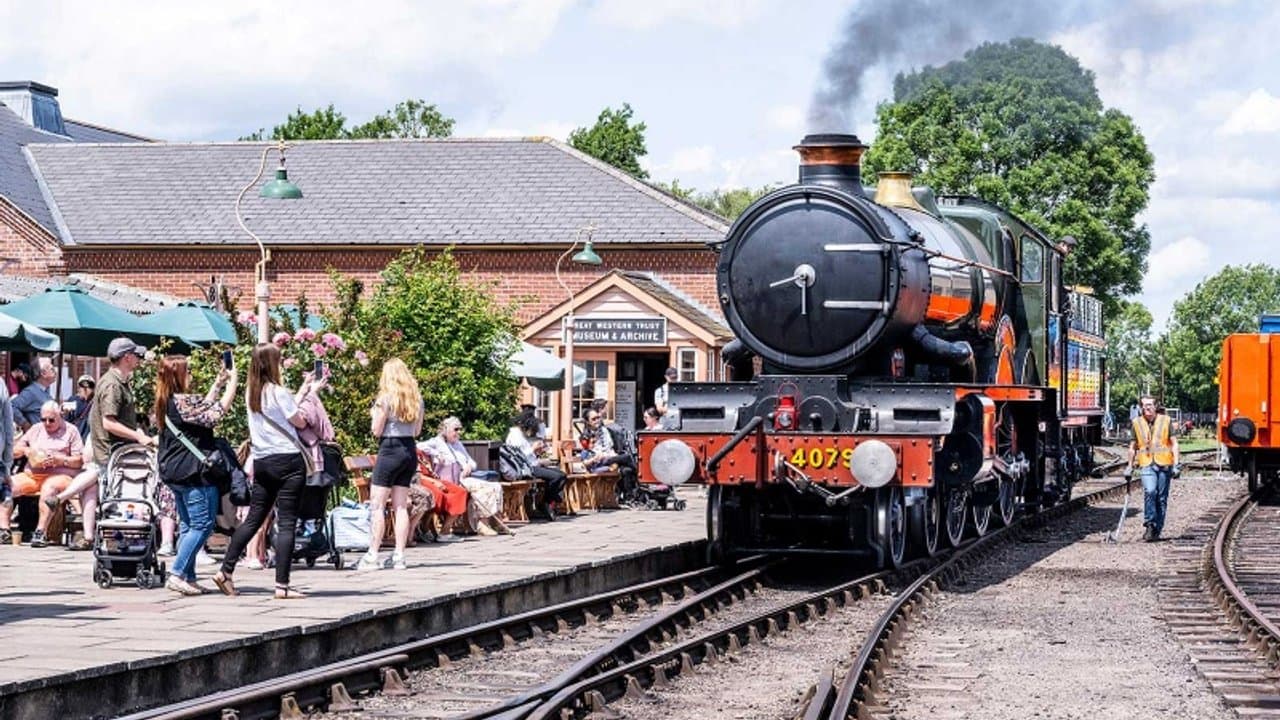
For many visitors, the steam locomotives are the main attraction. The railway has a fine collection of engines, most of which were designed for the Great Western Railway (GWR). This gives the line a very authentic West Country feel.
The Engines
The current fleet of steam engines includes several powerful machines well suited to the line's steep gradients.
- GWR 4200 Class No. 4277 ‘Hercules’: This is a heavy freight locomotive with a 2-8-0T wheel arrangement. This means it has two leading wheels, eight large driving wheels, and no trailing wheels, with its water carried in tanks on the side. These engines were designed for hauling huge coal trains in the Welsh valleys, so the hills of South Devon are no problem for it.
- GWR 5205 Class No. 5239 ‘Goliath’: Very similar to ‘Hercules’, this is another powerful 2-8-0T freight engine. Seeing one of these giants pulling a passenger train is a real sight to behold.
- GWR 7800 ‘Manor’ Class No. 7827 ‘Lydham Manor’: A handsome and popular engine. The Manors were mixed-traffic locomotives, meaning they were designed to pull both passenger and goods trains. With a 4-6-0 wheel arrangement, they were at home on rural routes in Devon, Cornwall, and Wales.
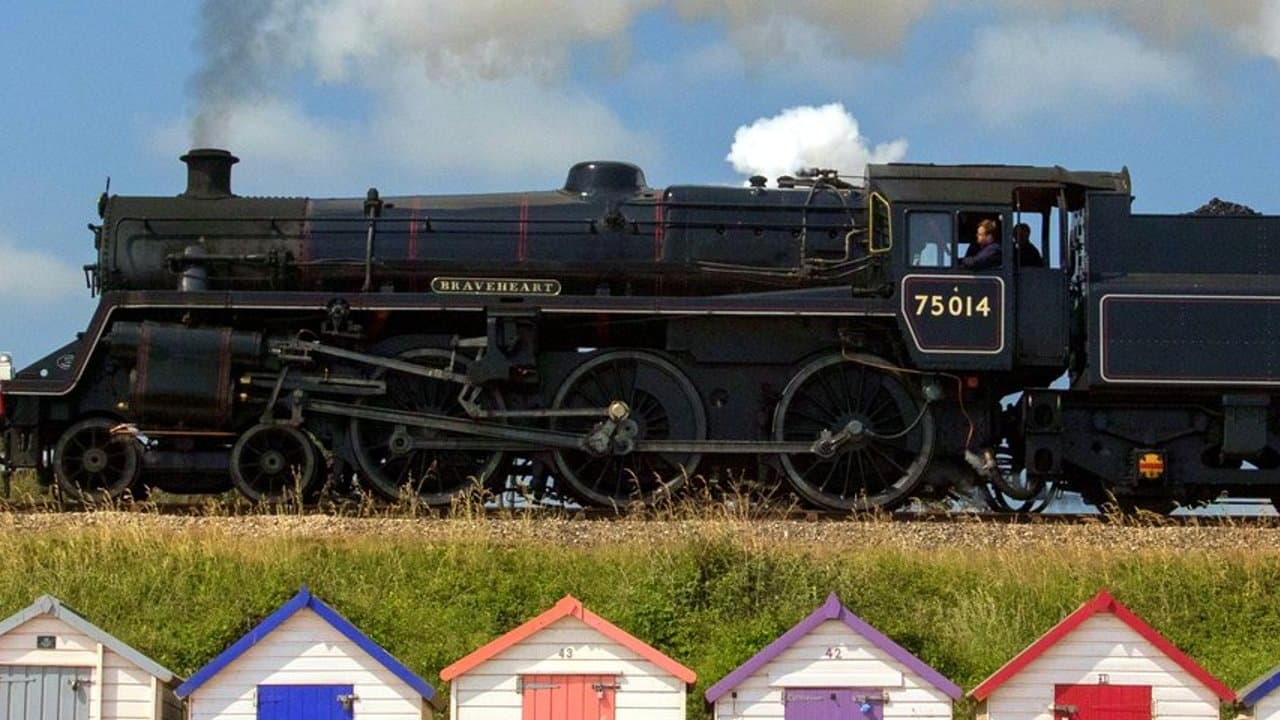
- BR Standard Class 4 No. 75014 ‘Braveheart’: This engine was built in 1951 after the railways were nationalised. It is a BR Standard Class 4 Tank engine, a versatile 4-6-0 design that worked all over the British Railways network.
Watching the engine crew at work is part of the fun. The driver controls the speed and brakes, listening carefully to the rhythm of the engine as it tackles the steep climbs. The fireman has the hot and strenuous job of shovelling coal into the firebox to keep the steam pressure just right. It is a real skill, a partnership between the crew and their powerful, living machine.
The Carriages
You will travel in restored British Railways Mark 1 coaches, which were the standard design from the 1950s. They are a delight to ride in, with their comfortable moquette seats and large picture windows. You can sit in your own private compartment with a closing door, just like in old films, or in the more open saloon carriages. Best of all, you can pull down the main window with a satisfying clunk. Leaning out (safely, of course) to see the engine up ahead, to smell the unique scent of coal smoke on the sea air, and to feel the breeze is a huge part of the steam railway experience.
A History Forged by Brunel
The line has a history stretching back to the 1850s and the great engineer Isambard Kingdom Brunel. He was the engineer for the South Devon Railway, which reached Torquay in 1859. A separate company, the Dartmouth and Torbay Railway, was formed to extend the line southwards.
Brunel surveyed the route and designed its major structures, including the viaducts at Broadsands and Hookhills. Like his other West Country lines, it was built to his famous ‘broad gauge’ of 7 feet and ¼ inch. This was much wider than the ‘standard gauge’ of 4 feet 8½ inches used on most other British railways. Brunel believed his broad gauge offered greater speed and stability, but it was eventually phased out in 1892. This conversion to standard gauge allowed trains to run across the whole country without the need for passengers and goods to change trains at the boundary of broad gauge territory.
Originally, the plan was to build a bridge across the River Dart and take the railway into Dartmouth itself. This was strongly opposed by the Admiralty, who feared a bridge would obstruct access to the Britannia Royal Naval College. As a result, the line terminated at Kingswear, and a ferry has connected it to Dartmouth ever since.
The line was operated by the Great Western Railway and later became part of British Railways. It was a busy holiday route for decades, but was earmarked for closure in the 1960s as part of the Beeching cuts. This was a nationwide plan, named after Dr Richard Beeching, that led to the closure of thousands of miles of railway line and many stations across Britain. A dedicated group of preservationists stepped in, and in 1973 it was sold to become the private Dart Valley Railway. It has operated as a heritage line and major tourist attraction ever since.
Planning Your Visit
A trip on the Dartmouth Steam Railway is a highlight of any holiday in South Devon, but a little planning helps make the day go smoothly.
Getting There
- By Train: The easiest way to arrive is by train. Paignton is well served by Great Western Railway services from Exeter St Davids, with connections from Bristol Temple Meads, London Paddington, and across the country. The heritage railway station is on the same site as the mainline one.
- By Car: Paignton has several large car parks near the station, but they can be very busy in summer. Arriving early is a good idea. Parking in Dartmouth and Kingswear is extremely limited, so taking the train from Paignton is often the least stressful option.
Tickets and Timetables
The railway operates from spring to autumn, with special services like the ‘Train of Lights’ in winter. Timetables vary throughout the year, with the most frequent services running during the summer holidays. It is essential to check the official website for operating days and times before you travel. Booking your tickets online in advance is strongly advised, as trains and tours can sell out.
Accessibility
The company works hard to be accessible to as many people as possible. They have a specially adapted carriage for wheelchair users, but space is limited so you must book this in advance by phone. Ramps are available for boarding at Paignton, Churston, and Kingswear. The ferries and river boats also have limitations, so it is best to discuss your specific needs with the railway when booking.
For a day out that combines stunning scenery, living history, and the simple joy of a journey by steam train and boat, the Dartmouth Steam Railway is hard to beat. It is more than just a ride on a train. It is a complete adventure through the beautiful landscape of South Devon.